Bio-Inspired AI in Transformation of Cybersecurity and Healthcare
Artificial Immune Systems (AIS) are computer systems that are modeled after the capacity of the human immune system to identify, learn and adapt to threats. With the rise in the sophistication of cyberattacks and the increase in the healthcare system, AIS has become an effective tool in both aspects. The development of machine learning and bioinformatics, artificial immune models are leaving the world of theoretical analysis and entering the industry of practical use.
The current knowledge of AIS functionality makes us realize the increased contribution of AIS to cybersecurity, disease detection, and adaptive AI systems.
The Biological Blueprint of AIS Innovation
The human immune system is highly adaptive and is able to differentiate between self and non-self cells and retains past infections. Artificial Immune Systems imitate this mechanism with the help of algorithms that are modeled on the clonal selection, immune memory and negative selection. The bio-inspired processes enable machines to detect anomalies, adapt to new threats and become increasingly accurate in detection as time progresses. AIS is very dynamic unlike traditional rule-based systems and thus it is very useful in an environment where there is always a change in threats.
Application Cybersecurity in Adaptive Threat Detection
The AIS is important in cybersecurity to identify unidentified malware and zero-day attackers. Artificial immune algorithms are used instead of the traditional approach of using known virus signatures to detect unusual system behavior. This anomaly-based detection minimizes its reliance on regular manual updates and enhances its resistance to the new cyber threats. Financial and healthcare organizations are slowly adopting AIS in network security systems to avoid data breach.
Raising the Smart Monitoring of Healthcare
In addition to cybersecurity, AIS is also achieving a great deal in medical diagnostics and bioinformatics. The artificial immune models can help in cancer detection through detection of abnormal cell patterns in big data. They also find use in wearable health monitoring gadgets that are used to measure abnormal physiological indicators in real time. AIS allows predicting the disease early and creating individual approaches to treatment by simulating the immune response processes.
The Future of Artificial Immune Computing
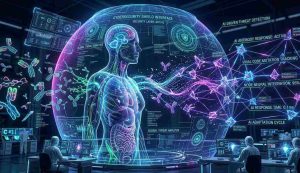
Due to the development of AI, Artificial Immune Systems are increasingly merged with deep learning in order to provide better decision-making. The hybrid models can learn faster and have better predictive accuracy. Researchers are looking at their uses in robotics, fraud detection, and smart infrastructure protection. The future of AIS lies in its adaptation as an element of intelligent adaptive systems globally with constant innovation in the practice.
Conclusion
The Artificial Immune Systems can be considered as a strong crossroads between biology and artificial intelligence. They are necessary in the current digital and healthcare environment due to their adaptability, learning, and anomaly detection skills. With the increasing cybersecurity threats and the increased data orientation of medical technologies, AIS is poised to keep changing its relevance and capability. By 2026 and after, bio-inspired AI will cease to be an experimental concept, it will be baseline.


