The Role of the Immune System in Pico Laser Pigment Clearance
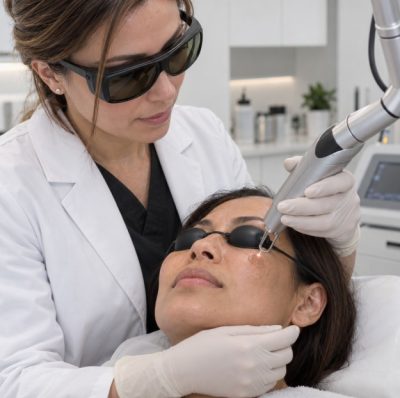 Pico laser treatment is often described as a procedure that “breaks up” unwanted pigment. That description is useful, but it leaves out an important part of the process. The laser does not simply make pigment disappear during the appointment.
During pico laser for clearer looking skin, laser energy targets pigment and produces changes that make some of that material easier for the body to process. The immune system, particularly the cells responsible for clearing cellular debris, then contributes to what happens afterward. This helps explain why pigmentation may fade gradually rather than immediately and why the response can vary from one person to another.
What Does a Pico Laser Do to Pigment?
Pico lasers deliver energy in extremely short pulses measured in picoseconds, or trillionths of a second. Depending on the device and wavelength, pigment in the treatment area can absorb that energy. The rapid delivery of energy produces a strong photoacoustic, or mechanical, effect. Rather than relying primarily on prolonged heating of the surrounding tissue, pico laser technology can disrupt targeted pigment into smaller particles.
This is only the first stage of clearance. Once pigment has been disrupted, the body must deal with the affected material. Normal inflammatory and immune processes become part of the response.
The Immune System Acts as a Cleanup System
The immune system is usually discussed in relation to fighting viruses, bacteria, and other threats. But immune cells have other jobs, including responding to tissue injury and helping remove damaged cells and debris.
Macrophages are particularly relevant. These immune cells can engulf and process cellular material through a process called phagocytosis. After laser treatment disrupts pigment-containing structures, macrophages may help take up some of the resulting particles and cellular debris. This process does not occur instantly. Biological clearance takes time, which is why you shouldn’t judge the final appearance of a treated area immediately after a laser session.
Why Pigment Fades Gradually
People sometimes expect a dark spot to disappear as soon as the laser pulse reaches it. Depending on the pigment being treated, however, visible changes can develop over days or weeks. Some superficial pigmented lesions may temporarily darken after treatment. The area can then gradually change as the skin recovers and treated material is shed or cleared.
Deeper pigment may behave differently. The location of pigment within the skin influences both the treatment approach and the body’s ability to process it. Pigment located closer to the surface is not necessarily managed in the same way as pigment found deeper in the dermis.
The type of pigmentation also matters. Sun-related spots, post-inflammatory hyperpigmentation, melasma, and tattoo pigment have different causes and biological characteristics. They should not be treated as interchangeable simply because they all involve visible color.
Inflammation Has a Complicated Role
Laser treatment creates a controlled response in the skin. Some inflammation may be part of the normal healing and clearance process. But more inflammation is not necessarily better. Excessive irritation or injury can increase the risk of unwanted pigmentation, particularly in people who are prone to post-inflammatory hyperpigmentation. Skin tone, treatment settings, recent sun exposure, and individual sensitivity can all influence this risk.
This is why using stronger settings to clear pigment faster can be counterproductive. The goal is not to create the greatest possible inflammatory reaction. It is to deliver treatment appropriate for the pigment and the patient’s skin while limiting unnecessary tissue damage.
Macrophages Can Also Help Explain Persistent Pigment
The relationship between immune cells and pigment becomes particularly interesting when considering tattoo removal. Tattoo pigment can persist partly because pigment particles are held within cells in the skin, including macrophages. When pigment-containing cells die, other macrophages may take up some particles again. This contributes to the long-term persistence of tattoo ink.
Laser treatment can alter pigment particles and the cellular environment around them, allowing some material to be gradually removed or redistributed through biological processes. This also helps explain why laser tattoo removal usually requires multiple sessions rather than one aggressive treatment. Although tattoo removal and treatment of natural skin pigmentation are not identical processes, both show an important point: laser energy initiates a change, but the body’s response shapes what follows.
Why Multiple Pico Laser Sessions May Be Needed
The immune system’s involvement is only one reason pigment clearance can take time. A provider must also consider how much energy can safely be delivered in one session. Attempting to treat all visible pigment aggressively at once may increase the likelihood of burns, prolonged inflammation, scarring, or unwanted changes in skin color.
Spacing sessions gives the skin time to recover and allows the treatment response to become clearer before applying additional laser energy. The number of sessions varies considerably. It can depend on the type, depth, and amount of pigment; the wavelength and settings used; skin tone; treatment history; and individual response. Patients should therefore be cautious about promises that a particular number of sessions will completely remove pigmentation.
Can You “Boost” Immune Clearance After Treatment?
Because the immune system contributes to the response, it may be tempting to look for supplements, detox programs, or other products that claim to accelerate pigment clearance. There is no simple way to force the immune system to remove treated pigment faster.
Instead, patients should concentrate on appropriate aftercare. This may include keeping the area clean, using recommended skincare products, avoiding picking or scratching, and protecting the skin from excessive sun exposure. Good general health habits, including balanced nutrition and adequate sleep, support normal body function. But they should not be promoted as guaranteed ways to speed up pico laser results.
Patients with health conditions or those taking medications that affect healing or immune function should discuss their medical history with the treating clinician before undergoing a laser procedure.
The Type of Pigment Still Determines the Treatment
Understanding immune clearance does not mean every pigmentation concern becomes suitable for pico laser treatment. Some types of pigmentation can be difficult to treat and may recur. Melasma, for example, is influenced by several factors and can sometimes worsen after procedures that produce irritation or inflammation.
A proper assessment should therefore come before choosing the laser. The clinician may evaluate the color and distribution of the pigmentation, its likely depth, skin tone, previous treatments, sun exposure, medical history, and possible triggers. In some cases, another treatment or a combination of approaches may be more suitable.
Pico Laser Treatment Is a Partnership With Biology
A pico laser provides the energy that initiates pigment disruption, but the treatment does not end when the device switches off. The skin then enters a period of recovery and biological processing, during which immune cells help manage damaged material and pigment particles
.
That gradual response is an important part of understanding realistic treatment timelines. Rather than viewing pico laser treatment as a procedure that instantly erases pigment, it is more accurate to see it as the beginning of a process. Technology targets the pigment, while the skin’s own repair and clearance mechanisms contribute to the changes that become visible afterward.
Because those biological processes vary between people and pigmentation types, careful diagnosis, appropriate laser settings, sensible treatment intervals, and proper aftercare remain central to safe, realistic pigment treatment.


